
BAL Assessment Rye Mornington Peninsula October 2025
The Classified Vegetation for this BAL assessment at Rye on the Mornington Peninsula sits on the land formation of old calcareous dunes formed in the Pleistocene times with the presence of calcium carbonate which can result in the cementing of dunes and indicates a “more stable“ dune system.
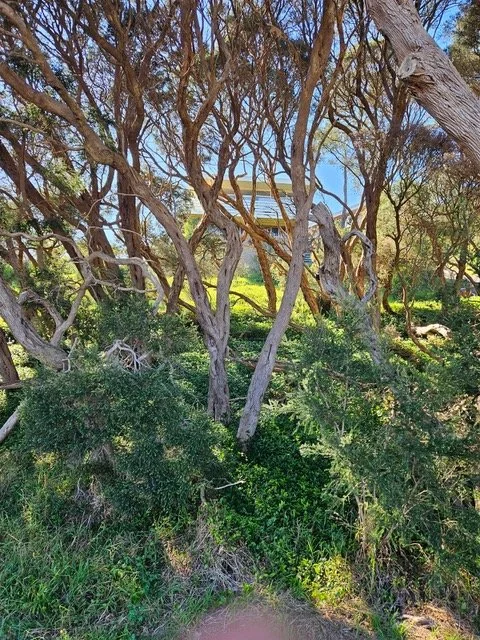
This Coastal scrub (Vegetation Class D in AS3959 2018 Australian Standard for the Construction of Buildings in Bushfire Prone-Areas) is dominated by Melaleuca lancelata (Moonahs), Leptosperum Laevigatum, Leptospermum Juniperinum complex, small pockets of Acacia Longifolia and occasional Banksia Integrifolia and Allocasuarina Littoralis with approximately 30-40% of the under story infested with Polygala Myrtifolia.
The intensity of the fuel load here is exacerbated by the dead and fallen tea trees and Melaleucas that have built up over twenty plus years. These windrows of fallen branches are often hidden by the presence of the purple-flowering Milkwort and Cape Ivy that scrambles up and over the fallen debris.
The land has been set aside for the potential future construction of a road and therefore hasn’t been managed to reduce its fuel loads largely.
The vegetation density is such that it is difficult to select a path through and there is a need to push through and climb over vegetation.
Fuel loads are very high. This vegetation combines with the undulating sand dunes to produce a very high fuel hazard and the ability for a bushfire to run rapidly uphill and potential to spot embers further forwards especially under a moderate wind.